


In the summer of 1997, Apple wasn't just sick. It was terminal.
This isn’t hyperbolic journalism; it’s financial arithmetic. The company had burned through $1 billion in a year. Market share had flatlined at 4%. The accountants estimated Apple had about 90 days of operational cash left before the checks started bouncing.
If you are a CEO with 90 days of life left, you conserve energy. You cut costs. You pray.
Steve Jobs did the opposite. He took the last significant pile of cash the company had — roughly $100 million — and shoved it into the center of the table.
He didn't spend it on R&D. He didn't spend it on finishing the iMac. He spent it on billboards of dead people.
It was a suicide bet. If it failed, there would be no money for severance packages. There would be no Chapter 11 restructuring. There would just be a padlock on the door in Cupertino.
This is the story of Think Different, the most terrifying "all-in" in corporate history.
1. The Nike Revelation: Stop Talking About the Rubber
To understand the insanity of the strategy, you have to look at the patient.

In the mid-90s, Apple was delusional. They were trying to beat Microsoft by arguing about specs. Their ads were full of spreadsheets comparing processor speeds and hard drive capacity.
Jobs called a meeting with the exhausted staff on September 23, 1997. He told them the hard truth: "Apple spends a fortune on advertising, and you’d never know it."
He then pointed to Nike.
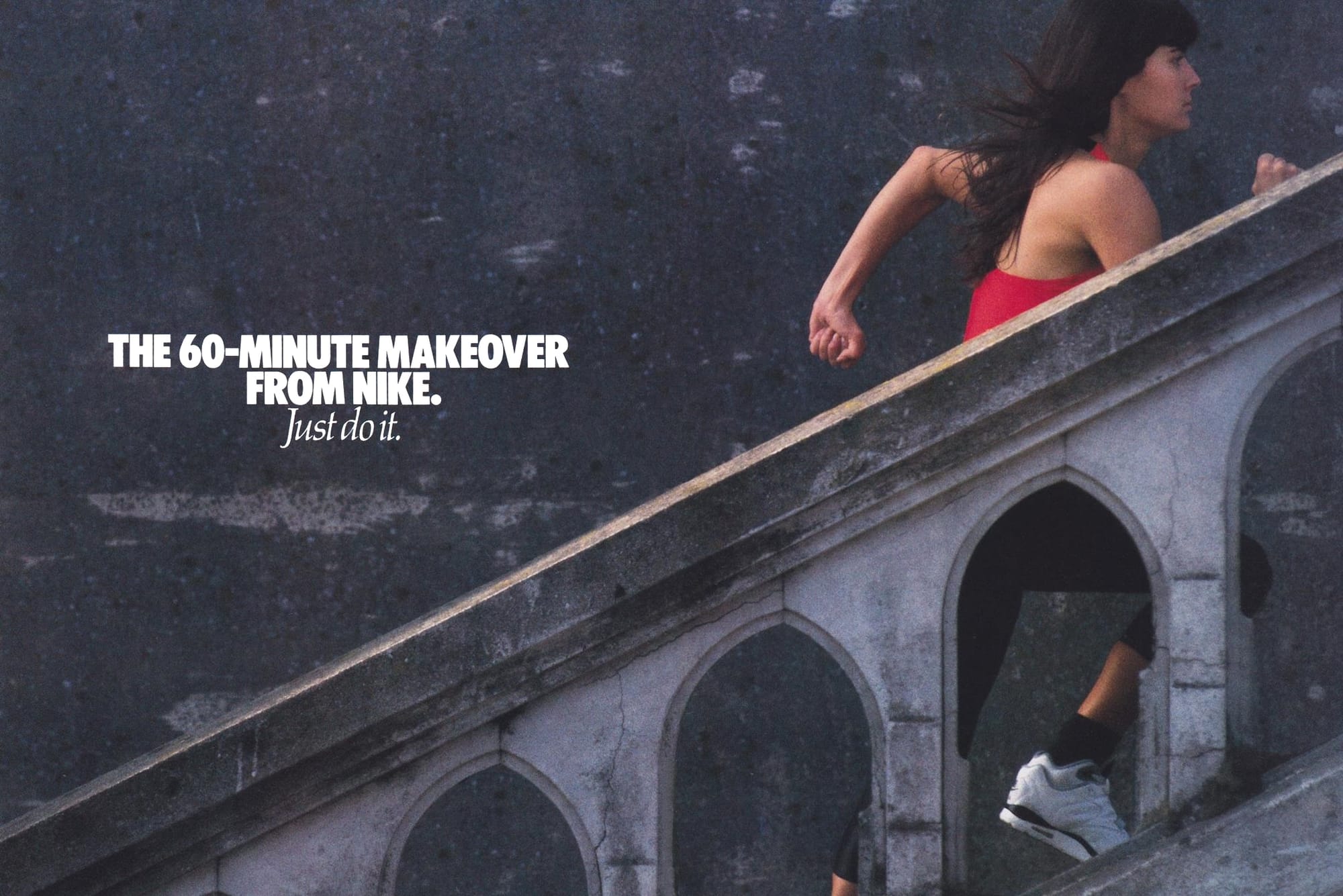
Nike, Jobs argued, sells a commodity. They sell rubber and glue. Yet, Nike never talks about the chemical composition of the shoelaces. They honor great athletes. They sell the idea of glory.
"Marketing is about values," Jobs said. "It’s a noisy world. We’re not going to get a chance to get people to remember much about us. We have to be really clear about what we want them to know."
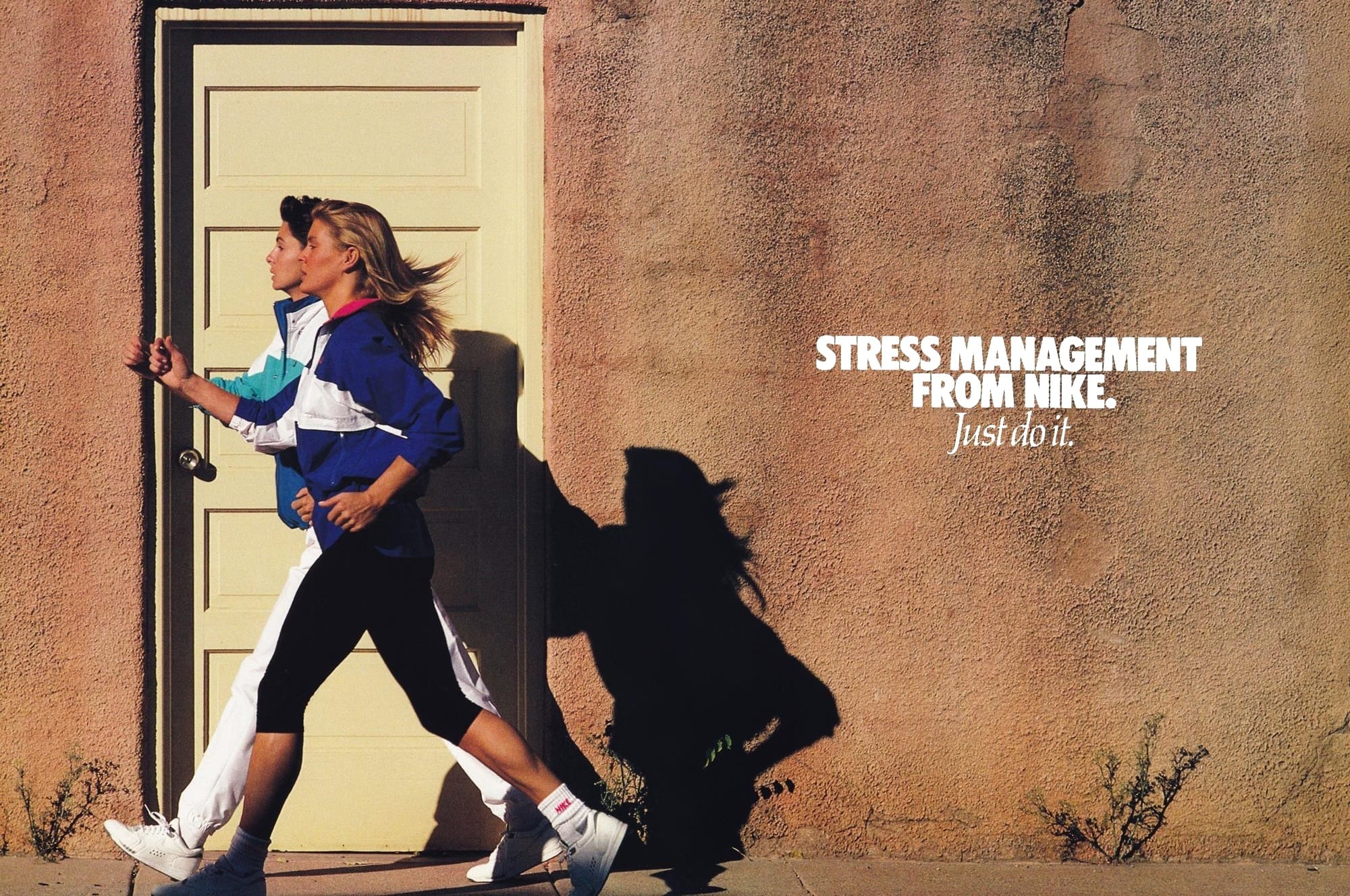
They decided to stop selling computers (mostly because the current computers sucked). They decided to sell a membership to a club of geniuses.
2. Buying Time with Ghosts
The brilliance of the Think Different campaign wasn't just the creative; it was the timing.
In late 1997, Apple’s product roadmap was empty. The revolutionary iMac G3 was still just a foam model in Jony Ive’s locked lab (it wouldn’t launch until May 1998). Apple had literally nothing new to sell for eight months.
If they had run ads for their existing beige boxes, they would have reminded everyone how far behind they were.
So, Jobs and Lee Clow (from the agency TBWA\Chiat\Day) bought a distraction. They spent that last $100 million plastering cities with black-and-white portraits of Einstein, Gandhi, Picasso, Amelia Earhart, and Bob Dylan.

There were no computers in the ads. No specs. No prices. Just a small Apple logo and two words: Think Different.
It was a masterstroke of "Attribute Transfer." By placing the Apple logo next to Einstein, they didn't have to say "our computers are for smart people." The brain made the connection automatically.
The campaign served a critical strategic purpose: it bought time. It was a $100 million smoke screen to keep the die-hard fans from defecting to Windows while the engineers frantically tried to build a computer that actually worked.
3. The Grammar Police vs. The Pirates
Then came the linguists.
As soon as the billboards went up, the grammar police came out of the woodwork. They argued, correctly, that "Think" is a verb and should be modified by an adverb. It should be "Think Differently."
Jobs hated "Think Differently." It sounded polite. It sounded academic.
He insisted on Think Different. His justification was fascinating: he wasn't using "Different" as an adverb to describe how you think. He was using it as a noun to describe what you think.
Think Big. Think Victory. Think Different.

It was a deliberate error. It created friction. In the pre-Twitter era, this was viral marketing. People argued about the grammar, which meant they were talking about the brand.
If they had used the correct grammar, it would have been a slogan. By breaking the rule, it became a manifesto. It signaled to the audience: "We don't care about your rules. We are pirates."
4. The Ego and the Voice
The TV spot, titled "The Crazy Ones," is perhaps one of the most famous 60 seconds of advertising ever filmed.
Here’s to the crazy ones. The misfits. The rebels. The troublemakers.
The script was written as a free-verse poem. The agency assumed Steve Jobs should read it. After all, it was practically his biography. He was the troublemaker who had been fired and returned.

Jobs agreed. He went into the studio and recorded a take. By all accounts, it was powerful. It was emotional. Lee Clow wanted to run it.
But on the morning the commercial was supposed to ship, Jobs called Clow and killed his own version.
"If we use my voice," Jobs said, "people will think this is about me. It’s not about me. It’s about Apple."
It was a rare moment of checking his massive ego at the door. Jobs understood that if he made himself the hero, the spell would break. The brand had to be bigger than the CEO.
They hired actor Richard Dreyfuss. He read it with a slow, burning intensity that Jobs loved. (Decades later, after Jobs died, Apple finally released the version with his voice. It is chilling.)
5. The Internal Brainwash
There is one final audience for this campaign that people forget: the employees.

In 1997, working at Apple was embarrassing. Your stock options were underwater. Your friends at Intel and Microsoft were buying Ferraris while you were updating your resume. The press was writing your obituary every day.
Think Different wasn't just an external ad; it was internal propaganda.
Jobs hung the posters in the hallways of the Cupertino campus. He played the "Crazy Ones" video at town hall meetings. He was reprogramming the corporate culture.
He needed the engineers to believe they weren't just making beige boxes for a corpse. He needed them to believe they were the spiritual successors to John Lennon and Martin Luther King Jr.

It worked. Morale stabilized. The engineers stopped quitting and finished the iMac.
The Verdict
The Think Different campaign proves a fundamental truth about marketing that most data-driven CMOs hate to admit: Logic sells products, but emotion saves companies.
Apple took the last bullets in their gun — money they desperately needed to keep the lights on — and fired them into the air to signal a revolution.
They stripped away the features, the benefits, the pricing, and the product itself. They bet the entire company on a feeling. And the result was the greatest corporate turnaround in history.
So, the next time you are staring at a spreadsheet trying to justify brand awareness spend, remember 1997. Remember that sometimes, the only way to save the ship is to burn the lifeboats. ~
Sources
- Segall, Ken. Insanely Simple: The Obsession That Drives Apple's Success. New York: Portfolio/Penguin, 2012.
- Jobs, Steve. Make Something Wonderful: Steve Jobs in His Own Words. Steve Jobs Archive, 2023.
- Apple Inc. Form 10-K (Annual Report). United States Securities and Exchange Commission, 1997.
- Isaacson, Walter. Steve Jobs. New York: Simon & Schuster, 2011.
- Kahney, Leander. Jony Ive: The Genius Behind Apple's Greatest Products. New York: Portfolio/Penguin, 2013.
- Lashinsky, Adam. Inside Apple: How America's Most Admired—and Secretive—Company Really Works. New York: Grand Central Publishing, 2012.
- Schlender, Brent, and Rick Tetzeli. Becoming Steve Jobs: The Evolution of a Reckless Upstart into a Visionary Leader. New York: Crown Business, 2015.
- Stross, Randall E. Steve Jobs & The NeXT Big Thing. New York: Atheneum, 1993.
Join the discussion
This article has comments from our members. Sign in to read them and share your thoughts.
Join for free