


When you spend enough time digging through the decaying paper trail of corporate history, you stop believing in the myth of the flawless visionary. The PR machines want you to think that the greatest moments in business were orchestrated by genius executives sitting in glass boardrooms, nodding in unanimous agreement as the future unfolded before them. It is a comforting lie.
The truth is usually much uglier, much pettier, and infinitely more fascinating.
Take the Apple "1984" commercial. Today, marketing professors teach it as the undisputed holy grail of advertising — the exact moment the tech industry realized it could sell hardware by weaponizing cultural rebellion. But what the glossy retrospective documentaries routinely gloss over is a simple, inconvenient fact. The board of directors at Apple absolutely hated the spot. They despised it. They thought it was a million-dollar vanity project that would make the company a laughingstock, and they explicitly ordered the advertising agency to kill it.
The most famous commercial in television history did not survive because of corporate foresight. It survived because of a calculated cocktail of insubordination, sheer arrogance, and a few rogue executives willing to burn their careers to the ground.
The Orwellian Gamble
To understand the panic, you have to smell the fear in the room in late 1983. Apple was bleeding. IBM — universally known as Big Blue — was systematically crushing the personal computer market, turning what was once a hacker's playground into a sterilized, buttoned-up corporate monopoly. Steve Jobs was desperate. He had bet the entire future of his company on the Macintosh, a machine that was wildly behind schedule, plagued by internal infighting, and dangerously expensive.
Jobs needed a miracle. He needed the world to stop and pay attention.

Enter Chiat\Day, the renegade advertising agency led by Jay Chiat, alongside copywriter Steve Hayden and art director Lee Clow. They didn't pitch a list of technical specifications. They didn't talk about RAM or floppy disk drives. Instead, they pitched a raw, dystopian narrative based on the George Orwell novel. IBM would be cast as Big Brother, a monolithic dictator brainwashing the masses, and Apple would be the brightly colored rebel smashing the system.
Jobs was mesmerized. Beside him sat John Sculley, the newly minted CEO of Apple who had recently left Pepsi. Sculley was a traditional marketing guy, used to selling sugar water with celebrity jingles, but he caught the electric current running through Jobs. Against his conservative instincts, Sculley signed off on the project, authorizing an unheard-of production budget of nine hundred thousand dollars and purchasing a full minute and a half of premium ad space during Super Bowl XVIII.
The London Fog and the Sledgehammer
To shoot the film, Chiat\Day hired Ridley Scott, the British director who had just finished bathing cinema screens in the grim, neon-soaked rain of Blade Runner. Scott treated the commercial not as a pitch to sell electronics, but as a miniature feature film.

He took over a soundstage at Shepperton Studios in London. To populate his dystopian nightmare, Scott hired actual local skinheads, paying them twenty-five dollars a day to shave their heads completely bald and march in synchronized, mindless lockstep. The set was choked with theatrical smoke, shadows, and industrial grime.
The hero of the spot, representing the Macintosh, was an unknown athlete named Anya Major. She was chosen not for her acting resume, but because she possessed the specific physical torque required to spin in a tight circle and hurl a heavy brass sledgehammer at a massive screen.
When the raw footage was assembled, it was jarring. It was dark, it was aggressive, and it possessed a cinematic violence that had absolutely no precedent in the cheerful, hyper-sanitized world of 1980s television advertising. More importantly, the commercial did not feature a single image of the actual computer until the final few seconds, and even then, it was just a line of text and a voiceover.
It was a piece of high-art psychological warfare. And it was about to walk into an ambush.
The Boardroom Execution
In December 1983, Chiat\Day brought the rough cut of "1984" to Apple headquarters for a formal screening with the board of directors. Steve Jobs was practically vibrating with excitement. He pressed play, expecting the room to erupt in the same euphoric applause he felt.
The screen flickered. The skinheads marched. The sledgehammer flew. The glass shattered. The screen went black.
The room went dead silent.
It was not a silence of awe. It was the suffocating, heavy silence that precedes an execution. Mike Markkula, the deeply conservative venture capitalist who had provided Apple with its first crucial injection of adult supervision and funding, buried his face in his hands. Another board member audibly groaned. They looked at the screen, and then they looked at Jobs, as if he had just detonated a stink bomb in a cathedral.
To the men controlling the purse strings, this was not a revolution. It was a catastrophic waste of capital. They were locked in a death match with IBM, fighting for the trust of business professionals, and their rogue co-founder had just spent nearly a million dollars on a weird, depressing British art film about skinheads.
Markkula was livid. He reportedly turned to the room and asked if they should just fire Chiat\Day on the spot. The consensus was clear, brutal, and unanimous. The commercial was dead. The board explicitly instructed John Sculley and the marketing team to contact CBS immediately and sell off the one and a half minutes of Super Bowl airtime they had already purchased.
Jobs was gutted. The corporate immune system was rejecting the very thing designed to save it.
The Insubordination of Jay Chiat
This is the exact point where the sanitized history books usually lie. They imply that Jobs gave an impassioned speech, rallied the board, and changed their minds. He didn't. The board remained utterly terrified of the commercial. The survival of "1984" came down to pure, unadulterated sabotage by the agency and the lower executive ranks.
John Sculley, caught between a furious board and a heartbroken Jobs, passed the execution order down to Bill Campbell, the Vice President of Marketing at Apple. Campbell called Chiat\Day with the grim news: sell the airtime. Get rid of the sixty-second slot, and get rid of the thirty-second slot.
Jay Chiat was not a man who took rejection gracefully. He was a street-fighter in a tailored suit, and he knew they were sitting on a cultural atomic bomb. He instructed his media buyer to quietly sell off the thirty-second slot. But when it came to the flagship sixty-second position, Chiat played dumb. He simply dragged his feet. He told Apple that they were "trying" to find a buyer, but that the market was just too soft so close to the game.
It was a blatant lie.
Meanwhile, back in Cupertino, Steve Jobs went to Steve Wozniak, the engineering genius who had co-founded the company. Jobs showed Wozniak the ad and told him the board was killing it because they were too cheap to pay for the airtime. Wozniak, possessing zero marketing background but a profound appreciation for a good prank, was instantly obsessed. Without missing a beat, Wozniak pulled out his checkbook and offered to pay for half of the airtime out of his own personal bank account if Jobs covered the other half.
The executive mutiny was complete. Bill Campbell, realizing Chiat hadn't sold the sixty-second slot and secretly loving the spot himself, made the unilateral decision to just let it ride. He didn't ask the board for permission. He didn't tell Mike Markkula. He just let the clock run out.
The Aftermath and the Irony
On January 22, 1984, the Los Angeles Raiders were systematically dismantling the Washington Redskins in Super Bowl XVIII. The game was a blowout, and millions of viewers were slipping into a mild, beer-soaked coma.
Then, early in the third quarter, the screen went dark. The ominous, grinding industrial soundtrack of Ridley Scott leaked into millions of living rooms. The sledgehammer flew. The glass shattered.
The reaction was instantaneous and violently polarized. But nobody ignored it.
Switchboards at local television stations lit up with confused, angry, and mesmerized callers. The next morning, news anchors on ABC, NBC, and CBS replayed the entire sixty-second commercial for free, just to discuss what the hell had happened during the football game. Apple generated millions of dollars in free, "earned" media — a concept that barely existed before that Monday morning. Within a hundred days, Apple sold over seventy-two thousand Macintosh computers, shattering every internal sales projection they had.
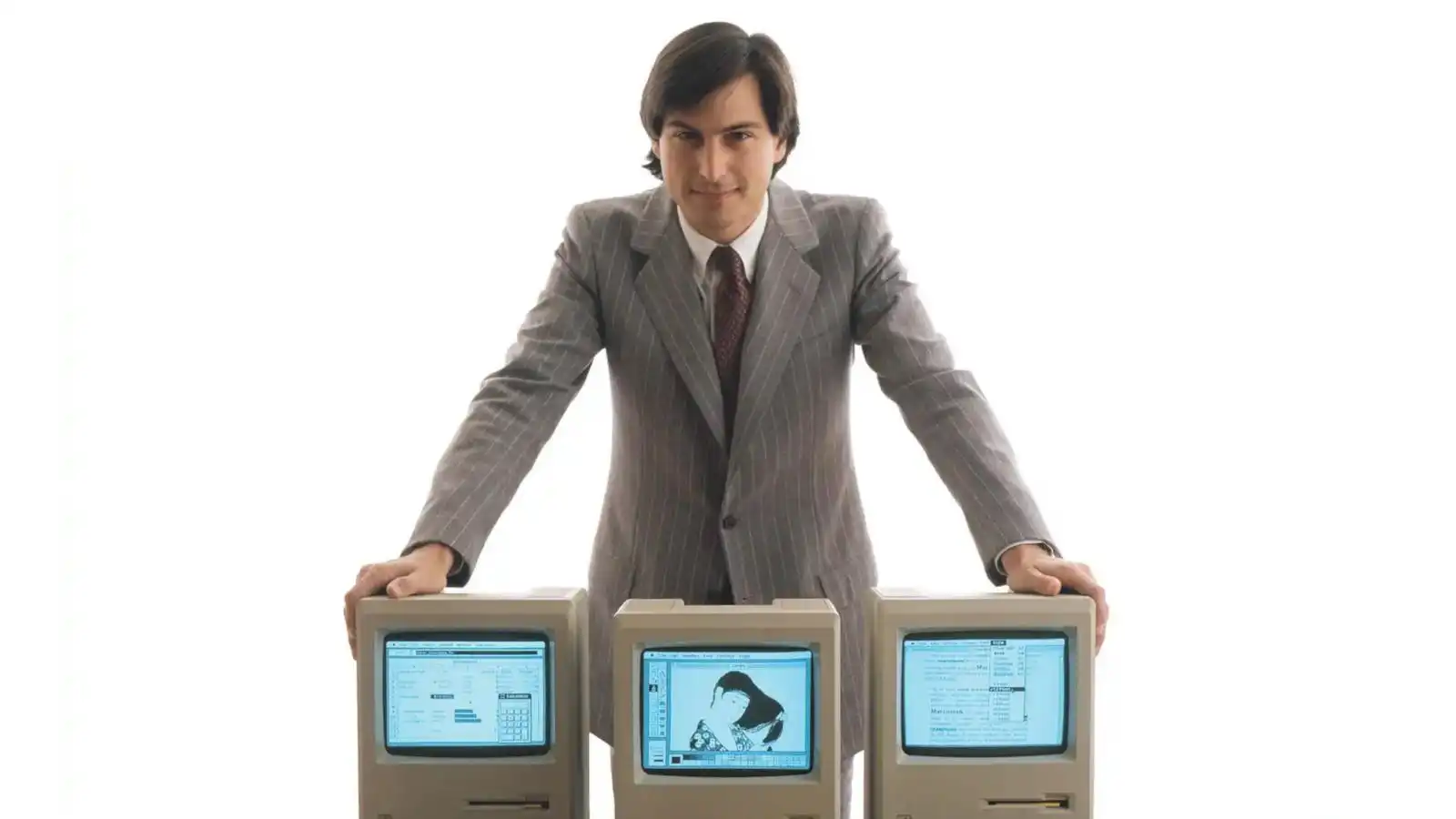
The suits in the boardroom were utterly humiliated by success. They had tried to smother the most effective piece of corporate propaganda of the twentieth century in its crib, only to be saved by the insubordination of the people they employed.
When we study brands, we have a terrible habit of attributing brilliance to the system. We assume that massive corporate entities are rational actors moving chess pieces with perfect foresight. But the anatomy of Apple during the birth of "1984" proves the exact opposite. True, paradigm-shifting brilliance almost never comes from consensus. It comes from friction. It comes from a handful of flawed, arrogant, stubborn individuals who are willing to look a room full of terrified executives in the eye, nod politely, and then completely ignore their orders. ~
Sources
- Jobs, Steve. Make Something Wonderful: Steve Jobs in His Own Words. Steve Jobs Archive, 2023.
- Isaacson, Walter. Steve Jobs. New York: Simon & Schuster, 2011.
- Lashinsky, Adam. Inside Apple: How America's Most Admired—and Secretive—Company Really Works. New York: Grand Central Publishing, 2012.
- Schlender, Brent, and Rick Tetzeli. Becoming Steve Jobs: The Evolution of a Reckless Upstart into a Visionary Leader. New York: Crown Business, 2015.
- Stross, Randall E. Steve Jobs & The NeXT Big Thing. New York: Atheneum, 1993.
Join the discussion
This article has comments from our members. Sign in to read them and share your thoughts.
Join for free